Pemberdayaan Siswa SMAN 1 Cimarga Melalui Produksi Konten Edukatif Di Youtube
DOI:
https://doi.org/10.54147/jpkm.v6i02.1534Keywords:
digital literacy; educational video; YouTube; high school students; media empowermentAbstract
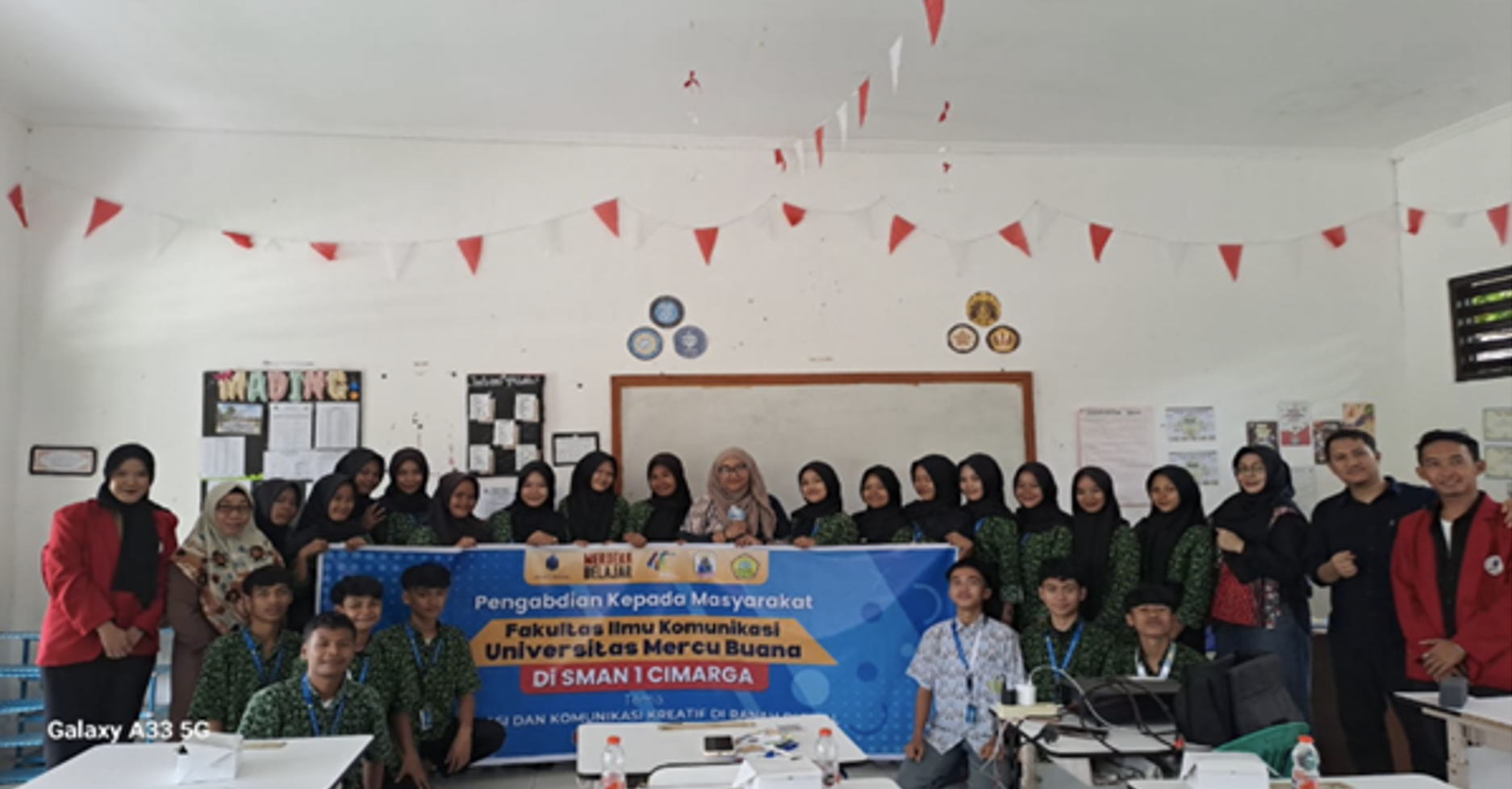
This community service program aims to enhance digital literacy and content creation skills among students of SMAN 1 Cimarga, Lebak, Banten, through the production of educational videos on the YouTube platform. The initiative addresses the limited use of digital media as an educational tool within the school environment. Conducted offline in April 2025, the program involved lecturers and students from Universitas Mercu Buana using a participatory and experiential learning approach. The training covered scripting, basic videography, video editing, and content distribution via the school’s YouTube channel. The results indicated a significant improvement in students' understanding of content production and increased confidence in expressing educational messages through digital media. Tangible outcomes included published educational videos, digital training modules, and a scientific article for dissemination. Collaboration with the school and support from the local education office contributed to the program's success. This initiative demonstrates that YouTube-based educational content creation can be an effective strategy to empower students as digital content creators with educational purpose.
References
Beard, C., & Wilson, J. P. (2018). Experiential learning: A practical guide for training, coaching and education (3rd ed.). Kogan Page.
Bonwell, C. C., & Eison, J. A. (1991). Active learning: Creating excitement in the classroom. ASHE-ERIC Higher Education Report No. 1.
Buckingham, D. (2003). Media education: Literacy, learning and contemporary culture. Polity Press.
Dennis, E. E., & Merrill, J. C. (2011). Media debates: Great issues for the digital age (5th ed.). Wadsworth.
Goodman, M. (2010). Corporate communication: Strategic adaptation for global practice. Peter Lang.
Kolb, D. A. (1984). Experiential learning: Experience as the source of learning and development. Prentice Hall.
Livingstone, S. (2004). Media literacy and the challenge of new information and communication technologies. The Communication Review, 7(1), 3–14. https://doi.org/10.1080/10714420490280152
McQuail, D. (2010). McQuail’s mass communication theory (6th ed.). Sage Publications.
Quebral, N. C. (2006). Development communication in a borderless world. AEJMC Conference Paper.
Rahardjo, B. (2021). Strategi komunikasi sosial digital. Prenadamedia Group.
Rogers, E. M. (2003). Diffusion of innovations (5th ed.). Free Press.
Rusadi, U. (2014). TIK untuk pembangunan. Jurnal Studi Komunikasi dan Media, 18(1), 89–104.
Sanjaya, W. (2016). Strategi pembelajaran: Berorientasi standar proses pendidikan. Kencana.
Sari, D. M., & Mahya, M. (2022). Pelatihan literasi digital berbasis konten edukatif. Jurnal Abdimas Kreatif, 5(2), 134–141.
Siregar, N. (2019). Media sosial sebagai alat advokasi remaja. Jurnal Komunikasi Pembangunan, 17(1), 55–64.
Sugiyono. (2019). Metode penelitian kuantitatif, kualitatif, dan R&D. Alfabeta.
Sukmayadi, V., & Yahya, A. (2020). Pembelajaran kreatif di era digital. Jurnal Pendidikan dan Teknologi, 21(1), 45–58.
Syamsuddin, M. R., & Mulyani, R. (2020). Peran guru dalam mendampingi pembelajaran berbasis video. Jurnal Pengabdian kepada Masyarakat, 3(1), 77–85.
UNESCO. (2018). Media and information literacy: Curriculum for teachers. UNESCO Publishing.
Warsita, B. (2017). Teknologi pembelajaran: Landasan dan aplikasinya. Rineka Cipta.
Widodo, S. A., & Suhartono. (2021). Pemberdayaan digital melalui konten kreatif. Jurnal Komunitas Digital, 4(3), 115–126.
Zubaedi. (2012). Desain pendidikan karakter: Konsepsi dan aplikasinya dalam lembaga pendidikan. Kencana.Adisaputro, G. (2019). Pengelolaan keuangan sekolah yang efektif: Studi kasus pada sekolah menengah di Jakarta. Jurnal Manajemen Pendidikan, 12(2), 101–110.
Downloads
Published
Issue
Section
License